Scalp care has moved far beyond a quick shampoo. In 2026, head spas are one of the most visible salon wellness trends, combining consultation, cleansing, exfoliation, targeted products and extended massage. For the right person, the experience can leave the scalp fresher and hair lighter at the roots.
However, a head spa is cosmetic care, not medical treatment. A responsible City Square JB hair salon should assess your concerns, explain the steps and refer you to a doctor or dermatologist when symptoms fall outside a salon’s role. Here are six signs that a professionally tailored session may be useful.
1. Your roots feel greasy again soon after washing
Oil production is normal, especially in Johor Bahru’s warm, humid weather. The issue is a noticeable change or a greasy, heavy feeling that returns unusually quickly. Styling residue, frequent touching, helmets and poorly rinsed products can all contribute.
- Watch the timing: Note whether oiliness appears within hours, after exercise or only when certain products are used.
- Check your technique: Shampoo should reach the scalp and be rinsed thoroughly; conditioner normally belongs through the lengths.
- Avoid over-stripping: Very harsh cleansing can leave the scalp uncomfortable and prompt an unhelpful cycle of aggressive washing.
A tailored head spa may use gentle deep cleansing and lightweight scalp care rather than coating the roots with heavy oils. The goal is a comfortable reset, not a squeaky or tight finish.
2. You can feel product build-up
Dry shampoo, spray, wax, serum and leave-in products can accumulate around the roots. Build-up may make freshly washed hair look flat, feel waxy or develop small flakes that are actually residue rather than dandruff.
- Look at brushes and combs: A visible film can be a clue that products are accumulating.
- Think about layering: Reapplying dry shampoo for several days without a thorough cleanse often creates congestion.
- Ask for the right reset: Exfoliation should be selected for your scalp condition, not automatically performed with a rough scrub.
Professional cleansing can lift residue more evenly than repeated scratching or vigorous home exfoliation. It can also help the stylist see the scalp more clearly before recommending a simpler routine.
3. Mild flakes keep returning
Flaking can come from dryness, product residue, irritation or dandruff, and these need different approaches. A head spa may help when flakes are mild and cosmetic, but the first step should be careful observation rather than assuming the scalp needs more oil.
- Notice the texture: Fine, dry flakes behave differently from oily, persistent scaling.
- Review recent changes: New shampoo, colour, fragrance or frequent exfoliation may be relevant.
- Do not pick: Scratching can damage the skin and make irritation harder to assess.
If flakes are thick, painful, intensely itchy or accompanied by redness and sores, skip the spa experiment and seek medical guidance. Salon products should not be sold as a cure.
4. The scalp feels tight or mildly uncomfortable
A tight feeling after washing may come from hot water, harsh cleansing, frequent chemical services or a disrupted moisture barrier. It can also happen when the weather, air-conditioning or routine changes.
- Check water temperature: Lukewarm water is kinder than a very hot rinse.
- Mention sensitivity: Tell the therapist about fragrance reactions, colour allergies and any recent chemical service.
- Choose soothing care: Gentle cleansing and barrier-supporting products may be more appropriate than exfoliation.
Scalp “skinification” is a major 2026 theme, with ceramides, niacinamide and soothing formats appearing in professional care. Trendy ingredients still need to be selected carefully; more active does not mean more suitable.
5. Your hair stays flat despite normal washing
Flat roots are not always caused by fine hair. Build-up, excessive conditioner, oily styling products or incomplete rinsing can weigh down the base. A head spa can help identify whether the problem begins at the scalp or comes from the haircut and product routine.
- Separate oil from weight: Hair may feel clean yet still be coated by rich products.
- Ask for lightweight finishing: The final blow-dry should show what the cleansed roots can do without a heavy serum.
- Review the cut: Density and shape may be more important than another scalp service.
A useful appointment ends with practical advice. If the only recommendation is a large bundle of products, ask which one or two steps matter most.
6. Your scalp routine feels confusing
Social media has made scalp brushes, acids, oils, serums and detoxes look essential. Used together without a plan, they may create irritation rather than improvement. A consultation-led head spa can provide a reset and help simplify what you do at home.
- Bring your product list: Include shampoo, dry shampoo, oils, tonics and anything applied near the roots.
- Describe frequency honestly: The therapist needs to know how often you wash, swim, exercise or wear head coverings.
- Ask for a one-month plan: Clear frequency and application guidance are more useful than vague promises.
Personalisation is the point. Someone with an oily scalp and bleached ends needs different placement and products from someone with dryness from crown to tips.
What normally happens during a head spa?
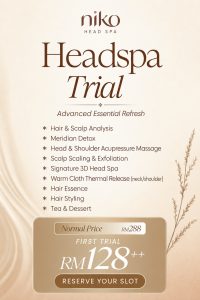
Services vary, but a well-run appointment generally begins with questions and visual assessment. It may then include cleansing, a suitable exfoliating or balancing step, massage, steam or warm water, conditioning for the lengths and a careful rinse.
- Before: Mention allergies, extensions, recent colour, pregnancy-related concerns and medical scalp conditions.
- During: Speak up if pressure, steam, fragrance or product causes discomfort.
- After: Ask when to wash again, what to avoid and how often the service is genuinely needed.
Digital scalp cameras are increasingly common in 2026, but an enlarged image is not a diagnosis. It can support a cosmetic conversation about residue, visible dryness and routine.
When a head spa is not the answer
Do not book a head spa as a substitute for medical care if you have sudden or patchy hair loss, bleeding, open sores, severe redness, swelling, pain, pus, intense burning or symptoms that persist despite gentle care. Massage and exfoliation may aggravate some conditions.
Likewise, be cautious about guaranteed hair-growth claims. Massage may feel relaxing and support a pleasant care routine, but no salon ritual should promise to treat an underlying health condition.
How to choose a safe, useful service
- Ask about hygiene: Tools, basins, towels and reusable devices should be properly cleaned.
- Ask about products: The salon should explain what is being applied and why.
- Ask about boundaries: A professional team should know when to stop and refer.
The best head spa leaves you with a comfortable scalp and a clearer routine, not a dramatic sales pitch. At a reputable City Square JB hair salon, expect the service to be matched to your current condition and your lifestyle.
If oil, mild build-up, recurring cosmetic flakes, tightness, flat roots or routine overload sound familiar, a consultation may be worthwhile. Treat the appointment as an informed reset: relaxing, practical and centred on scalp comfort rather than exaggerated promises.