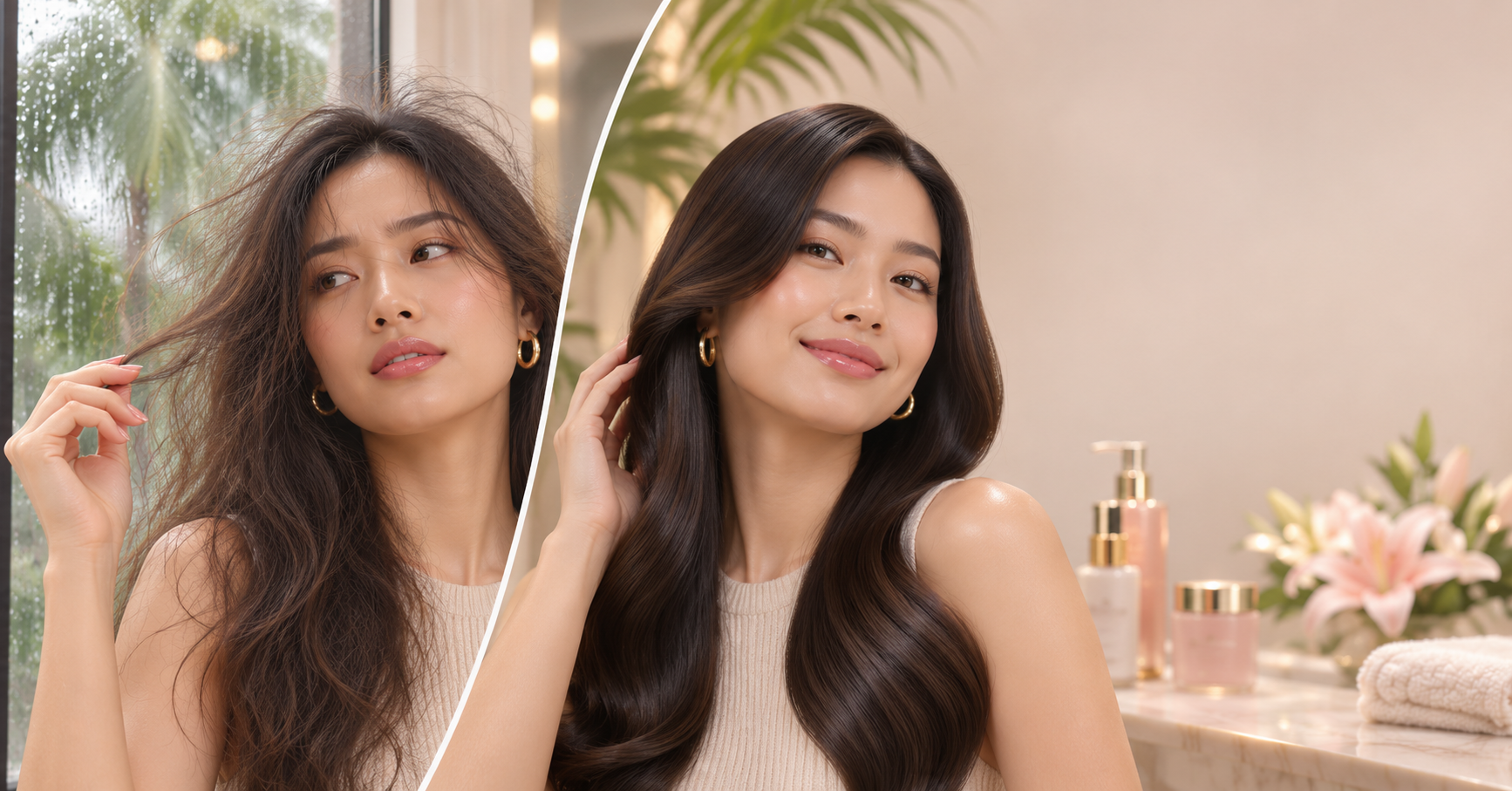
A fresh colour and new texture can sound like the perfect one-day transformation. Technically, some salon systems may allow colouring and perming close together, but “possible” does not always mean wise. Both services alter the hair chemically, and combining them can increase dryness, unpredictable colour results and breakage.
The safest plan depends on your hair history, condition, chosen products and desired result. In 2026, salons are favouring condition-led transformations and believable movement over rushed makeovers. Before booking both services at a Johor Bahru City Square Hair Salon, arrange a detailed consultation and expect the stylist to recommend spacing them if the fibre is already stressed.
- Understand what each service changes
A perm breaks and reforms internal bonds so the hair settles into a new wave or curl pattern. Permanent colour uses an alkaline process and developer to alter pigment inside the strand. Lightening removes natural or artificial pigment and is generally more demanding than depositing a darker shade.
When processes are combined, the hair must tolerate changes to both structure and colour. The risk is not only immediate breakage; the finished curl may be weaker, the shade may shift, and porosity may become uneven.
- Treat lightening as the highest-risk combination
Bleaching and perming on the same day is often unsuitable, particularly on previously lightened, fine or fragile hair. Lightener can reduce strength, while the perm solution asks the strand to swell and reshape. Together, they can push vulnerable hair beyond its limit.
If blonde or significantly lighter colour is your goal, a stylist may create a staged plan over several appointments. Dimensional highlights, a warmer intermediate shade or fewer lightened sections can deliver a fresh look while preserving more strength.
- Know that depositing colour is not automatically harmless
A darker permanent colour may involve less lifting, but it still uses chemicals that affect the cuticle. Demi-permanent colour or a gloss can sometimes be a gentler option, although suitability depends on the formulation and the perm system.
Do not assume that “ammonia-free”, “natural” or “conditioning” means risk-free. Product families differ, and compatibility should be checked by the professional using them.
- Share your complete chemical history
Tell the stylist about permanent dye, bleach, henna, metallic-salt products, keratin treatments, relaxers and previous perms. Include services from several years ago if that hair is still present in the lengths. Old processing does not disappear simply because the roots have grown.
Bring photographs and product names where possible. Concealing a home-dye session can lead to an unsuitable formula or unexpected strand-test result.
- Expect strand and elasticity tests
A strand test shows how a small section reacts to the proposed service. The stylist may assess whether it lifts evenly, holds a curl and remains resilient when wet. An elasticity test can reveal hair that stretches excessively or snaps.
If the test section becomes gummy, rough or weak, postponing is the responsible choice. No event date is worth sacrificing large sections of hair.
- Decide which result matters most
If you must prioritise, choose whether texture or colour is the main transformation. A perm may alter the way light reflects and can make an existing shade appear different because curls create shadows and dimension. Colour placement also looks different once straight hair becomes wavy.
Planning the final silhouette first helps the colourist place brightness where it will be visible. This suits the 2026 trend for soft, dimensional colour that moves naturally rather than a flat, uniform result.
- Ask about service order and timing
There is no universal sequence suitable for every product. Some professionals prefer perming first because the process can shift artificial colour; others may colour first within a compatible system. Manufacturer instructions and the stylist’s technical assessment should determine the order.
Spacing appointments gives the hair time to reveal how it feels after the first service. Your stylist can then adjust the second plan according to elasticity, porosity and the finished curl pattern. The waiting period may be days or several weeks; it should not be guessed.
- Keep expectations realistic on coloured hair
Previously coloured sections may process differently from natural roots. A curl can take tightly in one area and loosely in another, while porous ends may absorb colour too deeply. Even with careful technique, perfect uniformity may not be realistic.
A softer wave, fewer rods or a colour close to your existing level may be safer. Healthy-looking movement and shine will usually look more modern than an extreme result on compromised hair.
- Prepare for increased aftercare
Chemically textured and coloured hair needs gentle cleansing, regular conditioning and careful detangling. Use a wide-tooth comb, avoid rubbing with a rough towel and apply heat protectant when diffusing. Products should support the curl without leaving the hair coated or stiff.
Colour-safe shampoo can reduce fading, while an occasional mask may improve softness. Protein and bond-support products can be useful for some hair, but more is not always better; follow advice suited to your density and porosity.
- Watch for warning signs afterwards
Contact the salon if the hair develops severe tangling, unusual stretchiness, widespread snapping or scalp irritation. Stop high heat and tight styling while it is assessed. Trimming may be necessary if the ends have lost structural integrity.
Minor dryness can often be managed with a simpler routine, but cosmetic products cannot permanently repair hair that has been severely overprocessed.
A consultation at a Johor Bahru City Square Hair Salon should finish with a written or clearly explained sequence, home-care plan and realistic maintenance schedule. Same-day colour and perming may suit a limited number of healthy heads with compatible systems, but spacing is often the safer path. The best transformation is one you can enjoy beyond the first photograph.